












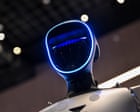
How close are we to the sci-fi vision of autonomous humanoid robots? I visited 11 companies in five Chinese cities to find out
Chen Liang, the founder of Guchi Robotics, an automation company headquartered in Shanghai, is a tall, heavy-set man in his mid-40s with square-rimmed glasses. His everyday manner is calm and understated, but when he is in his element – up close with the technology he builds, or in business meetings discussing the imminent replacement of human workers by robots – he wears an exuberant smile that brings to mind an intern on his first day at his dream job. Guchi makes the machines that install wheels, dashboards and windows for many of the top Chinese car brands, including BYD and Nio. He took the name from the Chinese word guzhi, “steadfast intelligence”, though the fact that it sounded like an Italian luxury brand was not entirely unwelcome.
For the better part of two decades, Chen has tried to solve what, to him, is an engineering problem: how to eliminate – or, in his view, liberate – as many workers in car factories as technologically possible. Late last year, I visited him at Guchi headquarters on the western outskirts of Shanghai. Next to the head office are several warehouses where Guchi’s engineers tinker with robots to fit the specifications of their customers. Chen, an engineer by training, founded Guchi in 2019 with the aim of tackling the hardest automation task in the car factory: “final assembly”, the last leg of production, when all the composite pieces – the dashboard, windows, wheels and seat cushions – come together. At present, his robots can mount wheels, dashboards and windows on to a car without any human intervention, but 80% of the final assembly, he estimates, has yet to be automated. That is what Chen has set his sights on.