












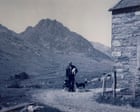
Once violently defended from extinction, Welsh is still a part of daily life. By learning my family’s language, I hoped to join their conversation
My maternal grandmother died 20 years ago. The funeral was held in a small Methodist chapel in the lush Conwy valley of north Wales. Her entire life – she had almost reached 100 – was spent in these hills. The drizzle that morning had slicked the trees and turned the slate of the chapel black. Our family, gathered under umbrellas, entered in order of seniority: Mum, now the family elder, with Dad on her arm, then my six aunts and uncles with their spouses, and finally the cousins, led by my brother Mark and me.
The room was austere. White walls, sturdy wooden furniture, a plain cross on the wall. Our family squeezed into box pews in the centre of the chapel. A couple of older men among the crowd reminded me of my grandfather, who had died decades earlier: similar thatches of black hair; dark, weathered complexions; history-book faces.