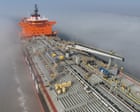












Forecasts suggest that global heating could create a shortcut from Asia to North America, and new routes for trading, shipping – and attack
Another week, another freak weather phenomenon you’ve probably never heard of. If it’s not the “weather bomb” of extreme wind and snow that Britain is hunkering down for as I write, it’s reports in the Guardian of reindeer in the Arctic struggling with the opposite problem: unnaturally warm weather leading to more rain that freezes to create a type of snow that they can’t easily dig through with their hooves to reach food. In a habitat as harsh as the Arctic, where survival relies on fine adaptation, even small shifts in weather patterns have endlessly rippling consequences – and not just for reindeer.
For decades now, politicians have been warning of the coming climate wars – conflicts triggered by drought, flood, fire and storms forcing people on to the move, or pushing them into competition with neighbours for dwindling natural resources. For anyone who vaguely imagined this happening far from temperate Europe’s doorstep, in drought-stricken deserts or on Pacific islands sinking slowly into the sea, this week’s seemingly unhinged White House talk about taking ownership of Greenland is a blunt wake-up call. As Britain’s first sea lord, General Sir Gwyn Jenkins, has been telling anyone prepared to listen, the unfreezing of the north due to the climate crisis has triggered a ferocious contest in the defrosting Arctic for some time over resources, territory and strategically critical access to the Atlantic. To understand how that threatens northern Europe, look down at the top of a globe rather than at a map.
Gaby Hinsliff is a Guardian columnist