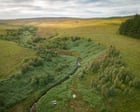













Set in the aftermath of the famine, the Hamnet author’s family saga folds in myth and folklore
‘His father was ever a man of few words,” begins Maggie O’Farrell’s 10th novel, a lengthy and ambitious story set in the aftermath of the Irish famine. Land opens in 1865 on a rainswept Irish peninsula and takes us to Dublin, Rome, Quebec and Kerala as it tells the story of two generations and gestures backwards and forwards at two more. The opening line came to O’Farrell on a train journey from Belfast to Dublin, and became the way in to a story based in part on that of her great-great-grandfather, who worked for the Ordnance Survey in Ireland not long after the great hunger. “What, I wondered, would it have been like to be revising the maps at that time,” she writes in a short introductory note; “to be recording and setting down the devastation that had occurred?”
In bitter weather, Tomás and his 10-year-old son Liam are mapping a peninsula – perhaps Dunmore Head in County Kerry, though O’Farrell doesn’t specify – using surveying poles and measuring chains. Tomás is in the pay of the English, who need him not only for his surveying ability and draughtsmanship, but for his language skills: they cannot easily find out from Irish speakers the names of places, or determine who owns what. It is Tomás’s job to untangle complex local legends and obscure toponyms to create a usable map, and he wants to ensure that the marks left by the famine – the empty houses and graveyards – are recorded on it, though the “redcoats” sign their names to his work. A famine survivor himself, scarred by unspeakable trauma, he tolerates this: as we later discover, assisting the surveyors and learning their trade was his route out of the workhouse. He might not have survived otherwise.